Antique Clocks
Antique Clocks
How to read, date and care for antique clocks, from tall case and shelf clocks to carriage clocks and ships bell movements.
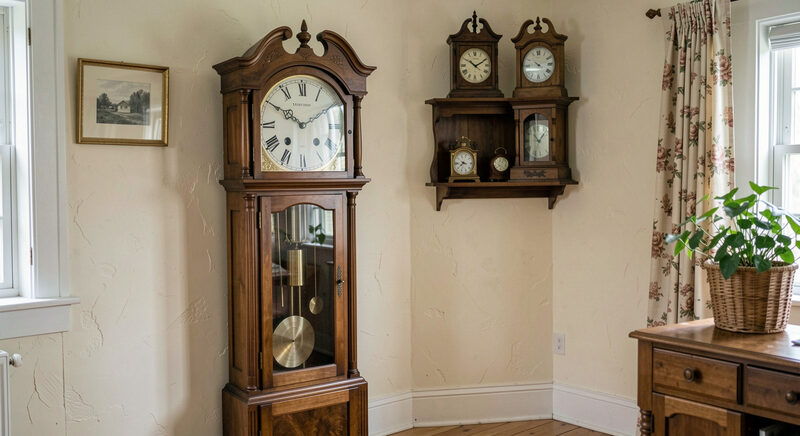
What counts as an antique clock
There is no law that fixes the word antique. In the trade, a clock made before about 1930 is usually treated as antique, and a clock from the century before that is treated as period. The line matters less than the object itself. A clock can be old and ordinary, or newer and important, and the age alone tells you little about whether it is worth keeping. What matters is whether the case, the dial and the movement belong together, whether the movement can still run, and whether the clock has been altered.
The word antique is also used loosely by sellers. A clock described as antique may be a twentieth century electric clock, a reproduction of an eighteenth century design, or a genuine early piece with a replaced movement. None of those is a disaster if it is described honestly, but the buyer should know which one they are looking at before money changes hands.
The families a collector meets
Antique clocks divide first by how they stand and where they hang. Tall case clocks, often called grandfather clocks, stand on the floor and carry a long pendulum in a narrow trunk. Shelf and mantel clocks sit on a table, a shelf or a fireplace. Wall clocks hang, and their pendulums swing in the open or behind a door. Carriage clocks were made to travel, with a handle and a protective case. Each family has its own habits of construction, and each has its own market.
Within those families, collectors also sort by movement. A clock may be weight driven, spring driven or driven by a mainspring wound through a key. It may strike the hour on a bell or a gong, chime a tune, or run silently. It may show the time on a painted dial, an enamel dial or a dial of engraved metal. The movement and the dial are the parts that most often decide what a clock is worth.
Tall case and shelf clocks
The tall case clock is the piece most people picture when they think of an antique clock. A good example has a case of solid wood, a dial that suits the period of the case, and a movement that still runs and strikes. Because tall case clocks are large and heavy, they are also the family most often damaged in a move, so a collector should look closely at the feet, the hood and the door hinges. Repairs there are common and not always fatal, but they should be known.
Shelf and mantel clocks are the easier entry into collecting. They are smaller, cheaper to move and easier to place in a modern room. Their variety is enormous, from simple timepieces with a plain wooden case to elaborate clocks with columns, inlay and painted glass. This is the family where a new collector can learn the reading skills that carry over to every other clock: how to look at a dial, how to hear a movement, and how to judge a case against its movement.
Carriage, mantel and novelty clocks
Carriage clocks were built for travel and are recognised by their rectangular brass or wood cases, their handles, and their glass panels through which the movement can be seen. They were made in large numbers in France and elsewhere, and they reward a careful eye because the cases and the movements are often mixed. A carriage clock with a fine movement in a plain case can be more interesting than a showy case around a poor one.
Novelty clocks are a family of their own. They may be shaped as a building, an animal or an object, or they may hide the dial inside a small cabinet. Collectors are drawn to them for the fun of the form, but the same rules apply. A novelty clock with a sound movement and an original case is a good object. One with a broken movement and a repainted case is a puzzle rather than a bargain.
Reading a clock before you buy
The order of reading a clock is simple and it does not change. Look first at the dial. Then look at the movement. Then look at the case. Then look for any marks or papers that tie the three together. The dial shows the period and the taste of the maker. The movement shows the quality of the work and whether it can still run. The case shows how the clock was kept and how much it has been altered. Marks and papers, when they exist, confirm what the other three already suggest.
Two pages on this site take that reading further. How to Date an Antique Clock sets out the features that place a clock in time, from the style of the numerals to the shape of the hands and the nature of the escapement. How an Antique Clock Is Restored explains what a proper restoration does to a movement and a case, and what should be left alone. Read both before spending money on a clock that needs work.
Care, and where to start
A clock that runs is a clock that is kept running. Long periods of rest let oil dry and grit settle, and a movement that has been left still for years should be checked before it is wound hard. Keep a clock away from direct sun, from damp walls and from the heat of a radiator, since all three damage cases and dials. Wind a weight driven or spring driven clock gently and at the same time each week, and stop at the first sign of resistance rather than forcing the key.
For a first clock, a shelf clock with a sound movement and an honest case is the sensible choice. It teaches the eye without risking much money, and it gives the collector a clock to live with while they learn. From there, the family a collector settles into is a matter of taste, but the skills of reading a dial, hearing a movement and judging a case carry across every one of them.
The National Association of Watch and Clock Collectors is the long standing body for this field and publishes reference material for members: nawcc.org.
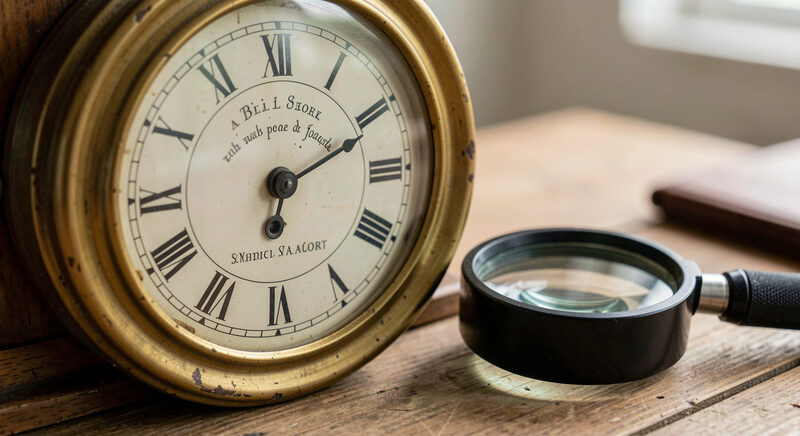
Antique Clocks
How to Date an Antique Clock
Read a clock's dial, movement, case and maker marks to place it in time, and learn which features date a clock most reliably.
Dial, movement, case, marks: the order that places a clock.
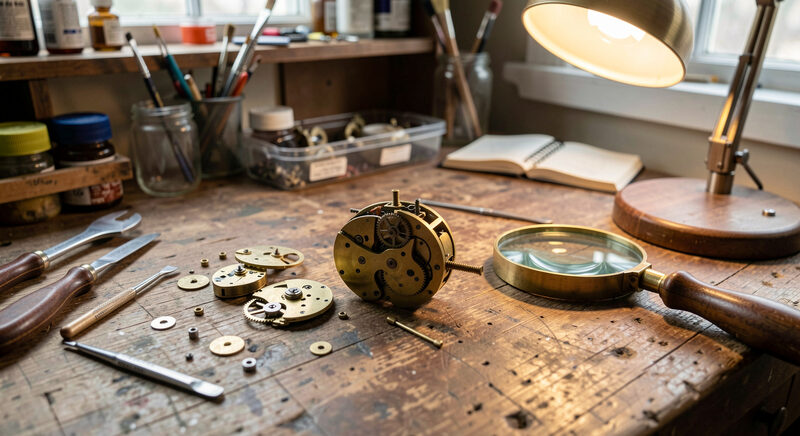
Antique Clocks
How an Antique Clock Is Restored
What a proper clock restoration covers, from cleaning a movement to replacing a suspension spring, and what to leave untouched.
What a proper restoration keeps, and what it must leave alone.