China, Glass and Porcelain
China, Glass and Porcelain
How to identify porcelain, pressed glass and tableware, from Nippon and Noritake services to Victorian glass and steins.
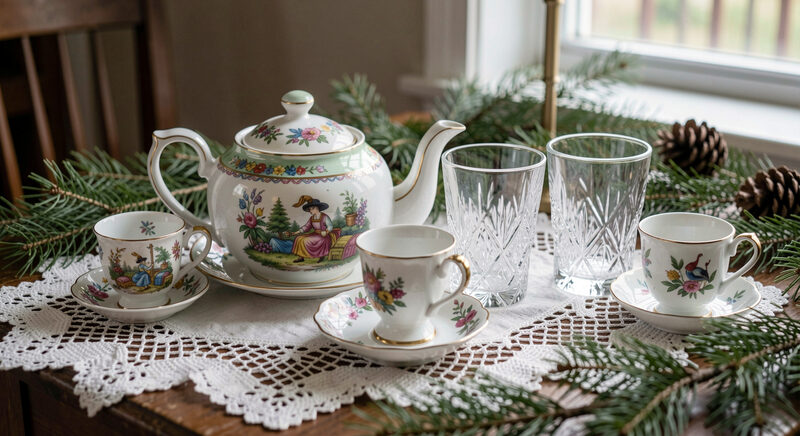
The families of tableware
China, glass and porcelain divide by material and by use. Porcelain is the hard, fine, often translucent material used for the best services, and it comes from a long tradition of makers in Europe and Asia. Earthenware is softer and more opaque, and it carried the everyday table. Glass ranges from the hand blown vessels of an earlier age to the pressed glass made in moulds in enormous quantities. Tableware, in turn, divides by the meal it served, which is why collectors speak of tea services, luncheon sets, berry sets and demitasse sets as separate things.
For the collector, the useful question is not only what an object is made of but what it was for. A service that was made for a particular meal carries a particular set of pieces, and a set is worth more than the same number of pieces bought one at a time. Completeness is one of the few things in this field that can be judged at a glance.
Porcelain and its marks
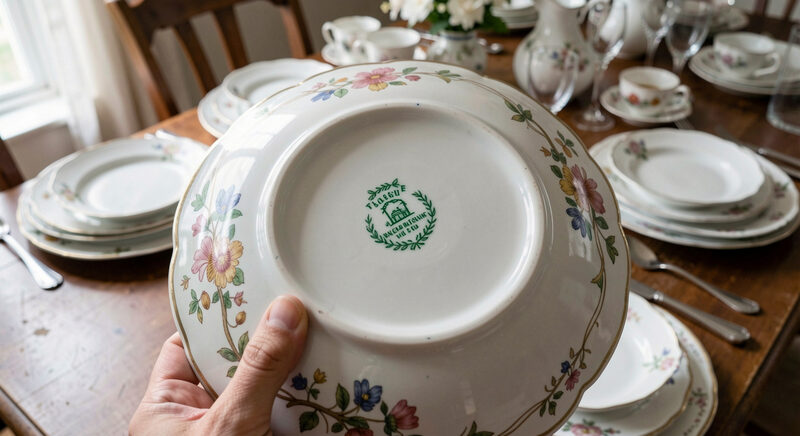
Porcelain is the most marked of all the table materials, and its marks are the collector's best guide. Makers stamped or printed their names on the base, and the form of the mark changed over the life of the firm, which allows a piece to be dated within a period. Marks also record the country of origin, the name of the pattern and sometimes the name of the retailer who sold the piece.
Reading a mark takes practice. The colour of the stamp, the shape of the lettering, the presence of a crown, a wreath or a simple name, and the way the mark sits under the glaze all carry meaning. A mark can also be a warning: a famous name on a piece whose body and decoration do not match the name is a sign that the mark has been added, or that the piece is a later copy. The page on Nippon and Noritake porcelain goes through one important family of marks in detail, and it is the page to read before buying a service with an Asian name on the base.
Glass, pressed and blown
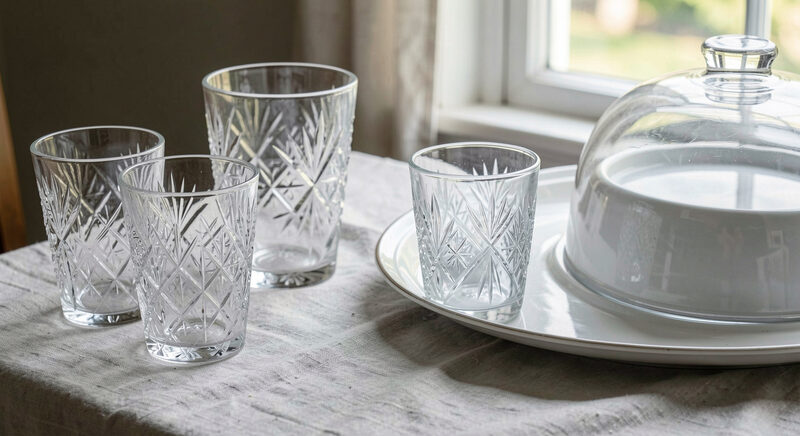
Glass divides first by how it was made. Blown glass is shaped by air and hand, and it shows the marks of the maker in its slight unevenness and in the bubbles that sit inside the material. Pressed glass is shaped in a mould, and it shows the marks of the mould in its crisp pattern and in the seam where the mould halves met. Pressed glass allowed a household to own glass that looked expensive, and it was made in such quantity that it is still the easiest glass to collect.
Pressed glass also divides by period. Early pressed glass, made when the method was new, tends to be heavier and its patterns bolder. Later pressed glass is lighter and its patterns finer, and it was often made in colours as well as clear. The page on Victorian and pressed glass sets out the patterns, the mould signals and the condition checks that separate one period from another.
Reading condition
Condition decides value in this field more than in almost any other, because tableware was made to be used and was used hard. A porcelain service may be complete and flawless, or it may carry a chip on the rim of the most used piece, a hairline crack that shows only when held to the light, or a repair that has been painted over. A glass tumbler may have a chip on its foot, a crack across its base, or a cloudiness that comes from years of washing in hot water.
The collector should inspect every piece, not the set as a whole. Hold porcelain to the light to find hairlines. Run a finger along the rim to feel a chip or a repair. Look at the base of glass for a chip where it has been set down. Check that the decoration is under the glaze where it should be, and that any gilding is worn evenly rather than rubbed away in one place. Damage that is disclosed is a price question. Damage that is hidden is a reason to walk away.
Sets, patterns and completeness
Sets are the backbone of this field. A service was bought as a set, used as a set and often broken as a set, so a complete set of an old pattern is rarer than its individual pieces. Collectors who want a set should learn the names of the pieces that belong to it, from the teapot and the creamer to the celery dish and the nut bowl, because a set that is missing a piece is harder to complete than one that never existed.
Patterns matter too. A pattern that ran for many years may exist in several versions, and pieces from different versions do not always match in colour or in the detail of the decoration. A collector buying to complete a set should carry a piece of the set as a sample, so that the new piece can be compared directly. The china, glass and porcelain guide on this site sets out the families and the reading of marks, and its two pages on porcelain and on glass take the inspection further.
Collectors Weekly carries reference and market material across these fields: collectorsweekly.com.
China, Glass and Porcelain
Nippon and Noritake Porcelain
Read Nippon and Noritake backstamps, date a service by its mark, and judge gilding, damage and completeness before buying.
Backstamps read against body, glaze and pattern.
China, Glass and Porcelain
Victorian and Pressed Glass
Identify Victorian and pressed glass patterns, tell early pressed from later moulds, and check for chips, cloudiness and repairs.
Mould marks, pattern names and the chips that never come out.