Smalls and Sporting
Renting a Car for an Antiques Buying Trip: Size, Photos and the Return
How to choose a rental car for an antiques buying trip abroad, document it at pickup, protect purchases inside it and handle a mark before the return.
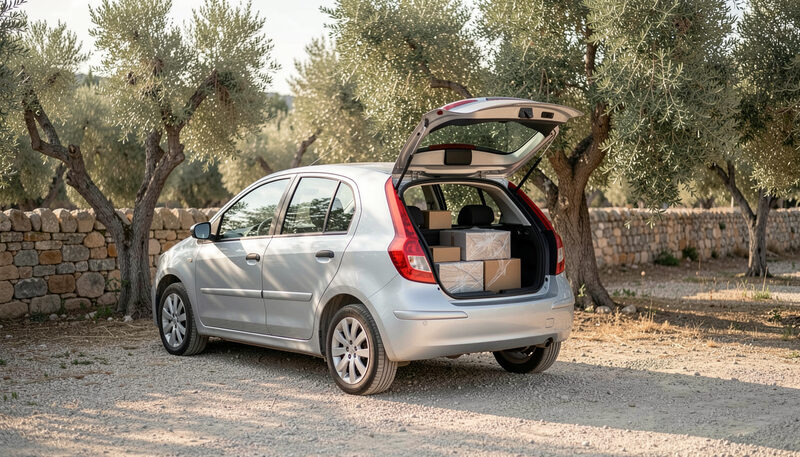
What size of rental car does a buying trip need?
The right size is set by the largest piece a collector might buy, not by the number of travelers. A small hatchback with the rear seats folded down carries a pair of lamps, a carriage clock and several boxes of china without trouble. It will not carry a chair, a framed mirror or a dresser top. A traveler who suspects that a larger find is possible should ask for a station wagon or a small van, and should measure the cargo opening before leaving the rental lot.
Flat floors matter more than total volume. A cargo area with a lip, a hump over the wheel wells or a sloping rear window makes loading awkward and fragile pieces harder to wedge. Before accepting a car, open the tailgate, fold the seats and imagine a tall clock lying along the floor. If the picture does not work, ask for another vehicle while the desk is still open.
What happens when a rental car comes back with a mark?
The question usually arises in the last hour of the trip, when the antiques are already packed and a flight is waiting. A scratched bumper, a dented door or a crushed corner found in a parking lot can lead to a damage report at the desk and a charge that the traveler did not plan for. A collector who has the pickup photographs described below, the diagram and a clear set of photographs of the new damage is in a stronger position to ask what the repair really costs.
For a traveler staying near the Mediterranean coast, a local body shop can give a price for a mark before the car goes back. In Gémenos, close to Aubagne, Carrosserie Sainte-Baume Gémenos asks drivers to send photos of a scratch, a crushed bumper or a dent and calls back with a free quote, and it also prepares cars that must be presented clean before they are returned. A figure from a local shop gives the traveler something concrete to set beside whatever the rental company asks for, whichever way the conversation goes.
If the mark is a shallow dent and the paint has not cracked, ask before the return whether it can be worked out from behind instead of resprayed, since that changes the figure a great deal. Around Marseille, Tôle Lisse Marseille looks at photos of a door, hood or hail dent and tells the driver, free of charge, whether the metal can come back without repainting.
The most important rule is not to leave the question for the airport. A mark found two days before the return date can be photographed, priced and discussed calmly. The same mark discovered at the desk has to be settled in minutes.
How should the car be documented at pickup?
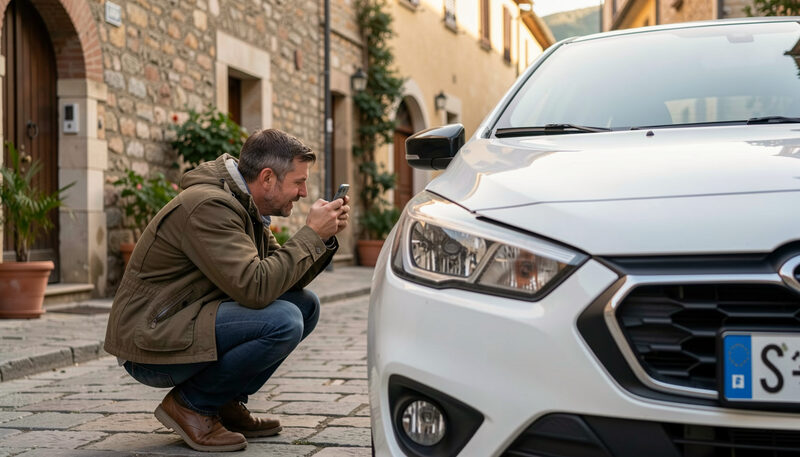
Photographs at pickup protect the traveler later. In daylight, and before the car leaves the lot, the collector walks around it and photographs all four sides, each corner, the wheels, the windshield and the roof. Raking light across a door shows shallow dents that a flat view hides, so a second pass with the phone held low and to one side is worth the extra minute. The photographs should carry a date and, if the phone allows, a location, and they stay on the phone until the car is returned.
The paper that comes with the keys is the other half of the record. Rental desks usually hand over a diagram of the car on which existing marks are noted. Every scratch and dent should appear on it before the traveler signs, and any mark missing from the sheet should be added in front of the agent. Contract terms differ from one company and one country to the next, so the rental agreement is worth reading in full, particularly the parts on damage and on what the traveler is responsible for.
Where should a collector park on a buying trip?
Parking is the most common source of damage on a trip built around markets and fairs. Flea markets and estate sales gather crowds, narrow lanes and cars parked tightly beside walls, and old stone towns often have streets that were laid out long before cars existed. A collector who is carrying an armload of fragile objects is also a distracted driver, with less attention for mirrors and corners.
Some habits reduce the risk. Choose an end space at the edge of a lot, away from the doors of other cars. Back in on arrival, so the load can be put in from the curb side and the car can pull out in a straight line. Fold the mirrors in when leaving the car in a narrow street. Carry a few blankets in the car, both to protect purchases and to rest fragile objects against while the next one is wrapped.
How can purchases be kept safe inside a rental car?
A rental car is not made for cargo, and its cabin is often smooth, hard and slippery. Wrapped objects should be boxed and wedged, with blankets between the boxes and a net or strap over the top layer. Nothing valuable should be left in sight when the car is parked. A removable cover over the cargo area, or a blanket thrown over the boxes, keeps a purchase out of view of a passer-by. The longer guide to carrying antiques by car explains how to wrap clocks, glass and china for a drive.
Heat is another hazard in a car parked in the sun. Glue, wax and old varnish soften, thin veneer can lift, and a closed car in summer reaches temperatures that no antique likes. Park in shade where possible, crack a window slightly, and keep delicate pieces off the rear shelf.
What paperwork matters when bringing antiques home?
Finds that cross a border come with rules, and the rules differ by country and by object. Receipts from the seller, a short description of each piece and a note of the price paid are the basic record, and they help at customs and with insurance. Official guidance for U.S. travelers is gathered at USA.gov's pages on traveling abroad, which are a sensible first stop before deciding how to ship or carry larger purchases home.
Large pieces are often better shipped than carried. A specialist shipper can crate a clock or a dresser, and the cost of crating is usually less than the cost of a repair to a piece that rode loose in a hatchback. Keep the shipper's paperwork with the receipts, and photograph each piece before it is crated.
What should be done on the last day of the trip?
The last day deserves a short checklist. Refuel the car as the agreement requires, remove every box and every wrapper, and clean the cabin. Walk around the car once more in daylight and photograph it from all four sides, matching the pickup pictures. Keep the final receipt from the desk and the photographs together, and do not delete either until the card statement has settled.
A collector who arrives early at the return desk has time to talk through any problem, ask for the agent's assessment in writing and ask what the company would do before a charge is made. A trip planned this way leaves the antiques, rather than the car, as the story of the week.
Is a larger rental car worth the extra cost on a buying trip?
Often yes, if a bulky find is possible. A car that is too small for the best piece of the trip costs more than the difference in the rental price, because the collector either leaves the piece behind or pays to ship it.
What photographs should be taken of a rental car?
All four sides, each corner, the wheels, the windshield and the roof, in daylight, before the car leaves the lot, and again before it is returned. A second pass with the phone held low shows shallow dents.
Can a local body shop price a mark before the car goes back?
Some shops will quote from photos. A figure obtained before the return date gives the traveler something to compare with any charge from the rental company.